


 English
 русский
 中文简体
中文简体 عربى
عربى
Why do 90K Staples raise practical concerns in real applications?
Fastening systems often look simple from the outside. A staple is small, and its function seems straightforward. In practice, performance depends on material matching, tool compatibility, and workflow conditions.
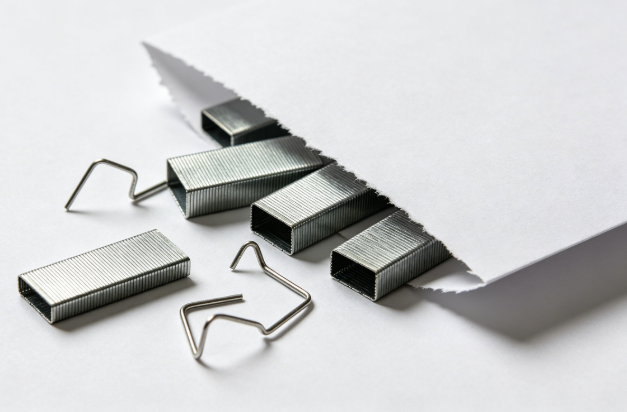
90K staples are widely used in packaging and light industrial operations. They support repetitive fastening tasks where speed matters. At the same time, they bring certain challenges that appear during daily use rather than in theory.
These challenges are not always visible at the start. They often show up after repeated operation, material changes, or equipment variation.
How does material compatibility affect performance?
One of the common issues is material mismatch. Not all surfaces respond to fastening in the same way. Some materials hold firmly, while others resist penetration or deform under pressure.
Paper-based materials usually work smoothly. Cardboard can also perform well when thickness is consistent. Difficulties begin when materials vary within the same workflow.
Mixed layers can cause uneven holding strength. Soft materials may compress too much. Hard surfaces may resist fastening entirely.
| Material Type | Common Challenge |
|---|---|
| Paper layers | Generally stable |
| Cardboard sheets | Variable resistance |
| Plastic films | Risk of tearing or slipping |
| Foam materials | Uneven compression |
| Mixed layers | Inconsistent holding |
These differences require adjustments in handling methods and expectations during use.
Why does tool compatibility matter more than expected?
90K staples depend on correct pairing with fastening tools. If the tool is not aligned with the staple type, performance can become inconsistent.
Misalignment may to weak fastening or repeated jamming during operation. In some cases, staples may not sit correctly in the feeding path, slowing down workflow.
This creates interruptions in production environments where steady output is important. Even small mismatches can affect overall efficiency.
Tool condition also plays a role. Wear over time may influence how smoothly staples are driven into materials.
What role does feeding consistency play in operation?
Staples are often used in continuous workflows. Feeding consistency becomes a key factor in maintaining smooth operation.
If staples shift slightly or fail to align properly during feeding, the process may stop unexpectedly. This is more noticeable in long production runs.
Irregular feeding can to partial fastening or repeated attempts on the same material area. This affects both speed and material appearance.
Operators often need to monitor alignment more closely when working with large batches.
How does material thickness create challenges?
Different materials require different levels of penetration. When thickness changes within a workflow, fastening performance may vary.
Thin materials may allow quick fastening but risk surface damage. Thicker materials may resist full penetration, Find to weak holding points.
This variation requires attention during setup. Without adjustment, the same staple may behave differently across product types.
In packaging environments, even small changes in thickness can influence final stability.
Why does surface condition affect fastening results?
Surface texture is another factor that influences staple performance. Smooth surfaces may allow easier penetration but can reduce grip. Rough surfaces may increase resistance but improve holding strength.
Dust, coating layers, or moisture can also influence interaction between staple and material. These conditions are not always controlled in real environments.
As a result, fastening quality may change depending on surface condition at the time of use.
Operators often need to observe how materials respond before running full-scale operations.
What challenges appear in high-frequency use environments?
In continuous production settings, fastening tools are used repeatedly over long periods. This can introduce performance variation.
Heat buildup, mechanical wear, and feeding pressure may gradually affect output consistency. Even small shifts can become noticeable over time.
In these environments, stable operation is important. Interruptions can affect workflow timing and material handling sequence.
Regular observation of tool condition becomes part of maintaining consistent performance.
How does operator handling influence results?
Human handling plays a role in fastening outcomes. Even with consistent tools and materials, differences in pressure, angle, or positioning can affect results.
If staples are not applied evenly, fastening strength may vary across the same batch. This is more visible in manual or semi-manual operations.
Training and familiarity with equipment help reduce variation. However, some level of inconsistency can still appear in fast-paced environments.
Small adjustments in handling technique can change overall stability.
What happens when environmental conditions change?
Temperature, humidity, and storage conditions can indirectly affect fastening performance. Materials may expand, soften, or become more rigid depending on environment.
These changes influence how staples interact with surfaces. In some cases, materials may resist fastening more than expected. In others, they may compress too easily.
Environmental variation is often gradual, making it less noticeable until performance shifts appear.
| Condition Factor | Possible Effect |
|---|---|
| High humidity | Material softening |
| Dry conditions | Increased rigidity |
| Temperature changes | Altered resistance |
| Storage variation | Surface inconsistency |
These factors highlight the importance of stable working conditions.
Why is maintenance often overlooked but important?
Fastening tools used with 90K staples require routine care. Without maintenance, feeding paths may become uneven, and alignment may shift.
Small buildup or wear inside the tool can let to inconsistent staple placement. This affects both appearance and holding strength.
Maintenance does not need to be complex. Regular cleaning and inspection often help maintain stable performance.
In many cases, unnoticed wear is one of the main reasons for unexpected fastening issues.
How do workflow expectations influence perceived challenges?
In fast-paced environments, expectations for speed and consistency are high. When small variations appear, they can be seen as larger problems.
90K staples are often used in repetitive processes where uniform results are expected. Any deviation stands out more clearly.
This makes it important to understand that minor variations are part of material and tool interaction rather than a single cause issue.
Awareness of this helps in adjusting workflow expectations and reducing unnecessary disruption.

 Quick Links
